
Workshop Notes | Finishing & Care
Why We Always Reach for Osmo Oil
"What finish do you use on your furniture?" — it's one of the questions we get asked more than almost anything else. The answer is almost always the same: Osmo Oil.
There's a reason we keep coming back to it. Osmo isn't a coating that sits on top of your timber — it's a hard wax oil that actually bonds to the wood fibres, becoming part of the piece rather than just a layer over it. And once you understand that distinction, it changes how you think about finishing timber entirely.
What exactly is Osmo Oil?
Osmo Hard Wax Oil is a German-made finish built on a base of plant oils and natural waxes — sunflower, soybean, carnauba, and candelilla. It was developed as an alternative to plastic-based lacquers and polyurethane coatings, and it shows. Where those finishes create a film on top of the wood, Osmo penetrates into the grain and cures from within.
The result is a finish that looks and feels like timber — because it largely is. No high-gloss shine that looks out of place. No plastic-y surface that masks the grain. Just the natural beauty of the wood, brought to life.
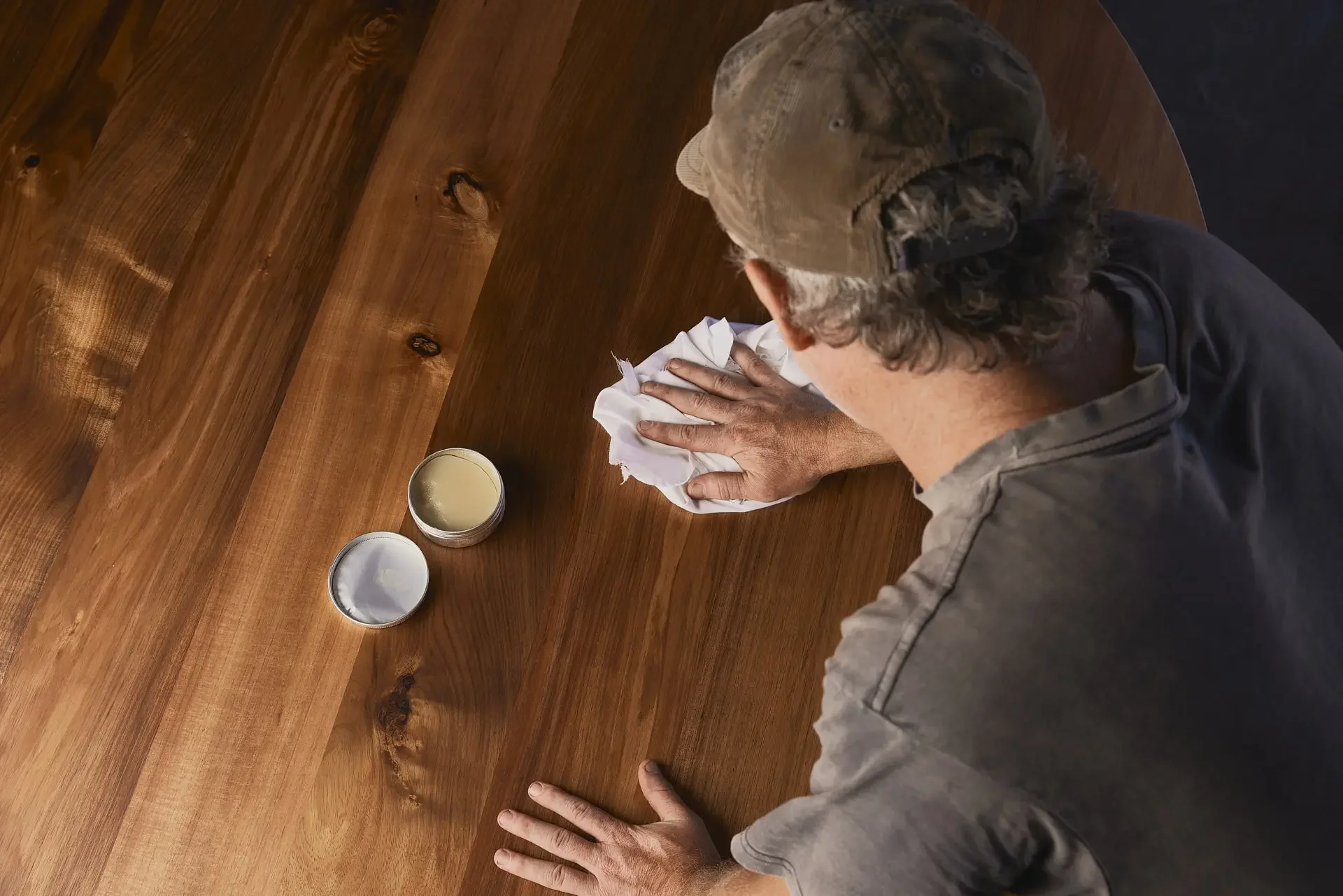
The timbers we use it on most
We work primarily with Australian and American hardwoods, and Osmo suits all of them beautifully. Watch what happens when you apply it across three of our favourites:
Tasmanian Blackwood
Rich golden-brown with a ribbon-like figure that Osmo makes sing
American Oak
Wide open grain with a warm honey tone that deepens beautifully with oil
Recycled Messmate
Character-filled and earthy — history made visible with every coat
Across all three, the process is the same: the oil sinks in, enhances the grain lines, and brings out a warmth and depth that simply doesn't exist with a surface coating. It's the difference between looking at timber and looking through it.
Why we choose it over other finishes
It protects without sealing. Osmo creates a durable, water-resistant surface that allows the timber to breathe and move naturally with changes in humidity — important for solid wood furniture that will last decades.
It enhances rather than obscures. The grain is the point. Osmo makes the most of it rather than hiding it under a uniform sheen.
It's food safe once cured. Certified safe for contact with food and children's toys once dry, making it ideal for dining tables, kitchen benches, and anything that sees daily family life.
It's silky smooth to the touch. Run your hand across an Osmo-finished surface and you'll feel the difference immediately — no tell-tale drag of a lacquer, just the quiet smoothness of well-oiled timber.
It ages beautifully. Unlike film finishes that crack, peel, or yellow over time, Osmo weathers gracefully. The maintenance is simple too — a light recoat refreshes the surface without stripping or sanding back.
"No plastic-y coating, no shine that doesn't belong — just timber the way it's meant to look."
How to maintain an Osmo-finished piece
One of the most practical advantages of Osmo is how easy it is to live with. For everyday care, a damp cloth is all you need. Avoid harsh chemical cleaners, which can strip the wax layer over time.
If your piece sees heavy use — a dining table with young kids, a well-loved kitchen bench — you can refresh the finish yourself every year or two. There's no need to strip the piece back to bare timber. Simply clean the surface, lightly scuff with a fine abrasive pad, and apply a thin coat of Osmo. It blends in rather than builds up.
Is it right for every piece?
Osmo is our go-to for almost all solid timber work. For upholstered pieces or furniture with very fine detail work, we may make different choices based on the specifics of the build. But if you're asking what we reach for by default — what we trust to do justice to the timber we've carefully selected and worked — it's Osmo, almost every time.
If you have a piece from us and want advice on caring for it, or if you're considering commissioning something and want to talk through finish options, feel free to get in touch. We're always happy to talk timber.